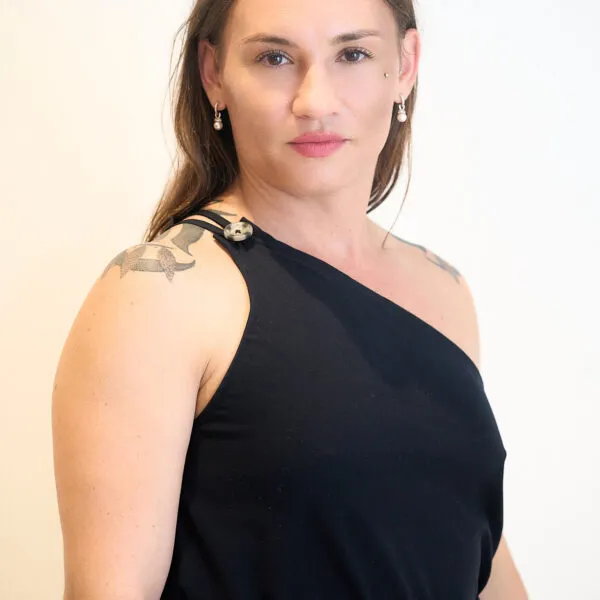
Susan
Susan Cole-Haley is a public speaker, broadcaster, writer and health…

Before my diagnosis, HIV wasn’t even a shadow in my life. I had just come out at eighteen, still taking my first steps into adulthood, and no one in my family, my school, or my friends had ever spoken about HIV in any meaningful way. I knew next to nothing. At nineteen, that lack of knowledge became the backdrop to the moment that changed everything.
It was 2013, and I was getting to know a guy. We were walking across Plaza España in Zaragoza when we passed a mobile HIV testing unit. He mentioned he needed to get tested. I encouraged him to go in, but he was too embarrassed. I told him I’d do it first, just to show him there was nothing to be afraid of. Minutes later, the test came back positive.
I told him to go home because I knew the rest of the day was going to be long. I called my best friend. She didn’t know anything about HIV, but she stayed on the phone because sometimes presence is more important than information.
Soon after, an educator from OMSIDA arrived. He took me to a café, sat with me, and explained the basic things I was too overwhelmed to fully absorb. What I do remember is that his presence put my feet back on the ground long enough for me to face what came next: telling my family.
I went home and told my mother. She collapsed into tears, carrying the memories of a generation that had watched people die of AIDS. All I had were the fragments of information I’d heard ten minutes earlier, but I tried to calm her. Later, when she walked into my room with laundry in her hands and simply asked, “How are you?” that was the moment I broke. My father, ever the researcher, immediately looked for information and came back with reassurance: You’re going to be okay. Don’t panic. And he meant it.
My first hospital appointment wasn’t comforting. The doctor focused on blame instead of care lecturing me about condoms, about what I “should” have done. I remember thinking: The past is already done. Can we please talk about the future?
The stigma didn’t stop there. Years later, already living in Madrid, the clinic in Zaragoza failed to reach me, called my parents’ landline, and left an alarming message. Worse, after forgetting to hang up properly, you could hear the doctor say, “Let him freak out.” For someone newly diagnosed, that kind of comment could be devastating. It reminded me how much work still needs to be done in healthcare.
I’ve always been a naturally optimistic person, but navigating HIV was uncharted territory. People around me didn’t know anything, and I did my best to carry myself through it.
Dating brought another dimension. I disclose early, usually before meeting someone, because I don’t want to waste my time or theirs. But disclosure changes the air of a conversation: instant silence, avoidance, blocking, rejection. Not always, but often enough that you start bracing for it.
About three years ago, I decided to go to therapy. Not because I was falling apart, but because I wanted to live better. Around the same time, I joined a peer-support group with Apoyo Positivo, and those two spaces changed my life. Therapy helped me organise the emotions I had buried or blurred. Peer support gave me a circle of people who understood every corner of the experience without needing explanations. When certain questions paralysed me, my psychologist gently guided me through them. One space opened wounds; the other helped heal them. That mix allowed me to grow in ways I couldn’t have imagined.
October 17th, I chose full visibility. I had always shared my status with friends, colleagues, even bosses, but going public was different. Looking back at the Javier of three years ago and seeing who I am now, the transformation is undeniable.
I was diagnosed at nineteen. Since then, I’ve finished my degree, completed a master’s, worked with children, held countless jobs, travelled, and built a life that makes me proud. HIV has never taken away my future.
If someone were considering going public, the first thing I’d give them is a hug. Truly. Visibility is a personal decision, and whatever they choose is valid. But if they do choose it, I’d tell them that love will meet them on the other side and that their courage can help others see HIV for what it truly is: one part of a complex, beautiful, whole life.
Self-stigma is often the hardest battle. It creeps in through tiny questions: “Will people stop coming to the bookshop if they know I’m HIV positive?” These thoughts are irrational, but they’re real, and dismantling them takes time.
What steadied me was the response. After going public, the messages of gratitude, affection, and light came flooding in. Two days later, a mother whose child came to my storytelling sessions called the shop to thank me. During a solidarity storytelling event we held to raise funds for Apoyo Positivo, families came, embraced me, and spoke openly about HIV. It helped them, and it helped me. It was mutual healing.
I give a lot, yes. But what I receive in return is far greater.
My name is Javier Carilla. I’m 30 years old, and I’ve been living with HIV for 11 years. My diagnosis does not define me it shaped me, yes, but it did not limit me. Today, I take one pill a day. I work, love, create, and live deeply.
U=U Undetectable =Untransmittable empowers me. It restores dignity, possibility, and truth to our intimate lives. But U=U is not the end of the conversation. We cannot let “undetectable” become “invisible.” Treatment suppresses the virus; it does not erase stigma. That work is ours to continue.
I live a full life: in community, in service, in joy, and in hope.
Before my diagnosis, HIV wasn’t even a shadow in my life. I had just come out at eighteen, still taking my first steps into adulthood, and no one, my family, my school, my friends, had ever spoken about HIV in any meaningful way. I knew next to nothing. At nineteen, that lack of knowledge became the backdrop to the moment that changed everything.
It was 2013, and I was getting to know a guy. We were walking across Plaza España in Zaragoza when we passed a mobile HIV testing unit. He mentioned he needed to get tested. I encouraged him to go in, but he was too embarrassed. I told him I’d do it first, just to show him there was nothing to fear. Minutes later, the test came back positive.
I told him to go home because I knew the rest of the day was going to be long. I called my best friend. She didn’t know anything about HIV, but she stayed on the phone because sometimes presence is more important than information.
Soon after, an educator from OMSIDA arrived. He took me to a café, sat with me, and explained the basic things I was too overwhelmed to absorb fully. What I do remember is that his presence put my feet back on the ground long enough for me to face what came next: telling my family.
I went home and told my mother. She collapsed into tears, carrying the memories of a generation that had watched people die of AIDS. All I had were the fragments of information I’d heard ten minutes earlier, but I tried to calm her. Later, when she walked into my room with laundry in her hands and simply asked, “How are you?” that was the moment I broke. My father, ever the researcher, immediately looked for information and came back with reassurance: You’re going to be okay. Don’t panic. And he meant it.
My first hospital appointment wasn’t comforting. The doctor focused on blame instead of care, lecturing me about condoms, about what I “should” have done. I remember thinking: The past is already done. Can we please talk about the future?
The stigma didn’t stop there. Years later, already living in Madrid, the clinic in Zaragoza failed to reach me, called my parents’ landline, and left an alarming message. Worse, after forgetting to hang up properly, you could hear the doctor say, “Let him freak out.” For someone newly diagnosed, that kind of comment could be devastating. It reminded me how much work still needs to be done in healthcare.
I’ve always been a naturally optimistic person, but navigating HIV was uncharted territory. People around me didn’t know anything, and I did my best to carry myself through it.
Dating brought another dimension. I disclose early, usually before meeting someone, because I don’t want to waste my time or theirs. But disclosure changes the air of a conversation: instant silence, avoidance, blocking, rejection. Not always, but often enough that you start bracing for it.
About three years ago, I decided to go to therapy. Not because I was falling apart, but because I wanted to live a better life. Around the same time, I joined a peer-support group with Apoyo Positivo, and those two spaces changed my life. Therapy helped me organise the emotions I had buried or blurred. Peer support provided me with a circle of people who understood every aspect of the experience without needing explanations. When certain questions paralysed me, my psychologist gently guided me through them. One space opened wounds; the other helped heal them. That mix allowed me to grow in ways I couldn’t have imagined.
October 17th, I chose complete visibility. I had always shared my status with friends, colleagues, even bosses, but going public was different. Looking back at the Javier of three years ago and seeing who I am now, the transformation is undeniable.
I was diagnosed at nineteen. Since then, I’ve finished my degree, completed a master’s, worked with children, held countless jobs, travelled, and built a life that makes me proud. HIV has never taken away my future.
If someone were considering going public, the first thing I’d give them is a hug. Truly. Visibility is a personal decision, and whatever they choose is valid. But if they do choose it, I’d tell them that love will meet them on the other side and that their courage can help others see HIV for what it truly is: one part of a complex, beautiful, whole life.
Self-stigma is often the most brutal battle to face. It creeps in through tiny questions: “Will people stop coming to the bookshop if they know I’m HIV positive?” These thoughts are irrational, but they’re real, and dismantling them takes time.
What steadied me was the response. After going public, the messages of gratitude, affection, and light came flooding in. Two days later, a mother whose child came to my storytelling sessions called the shop to thank me. During a solidarity storytelling event we held to raise funds for Apoyo Positivo, families came, embraced me, and spoke openly about HIV. It helped them, and it helped me. It was mutual healing.
I give a lot, yes. But what I receive in return is far greater.
My name is Javier Carilla. I’m 30 years old, and I’ve been living with HIV for 11 years. My diagnosis does not define me; it shaped me, yes, but it did not limit me. Today, I take one pill a day. I work, love, create, and live deeply.
U=U Undetectable = Untransmittable empowers me. It restores dignity, possibility, and truth to our intimate lives. But U=U is not the end of the conversation. We cannot let “undetectable” become “invisible.” Treatment suppresses the virus; it does not erase stigma. That work is ours to continue. I live a full life: in community, in service, in joy, and in hope.
Share this story on: