Kagan
My name is Kagan, and my work has always been…
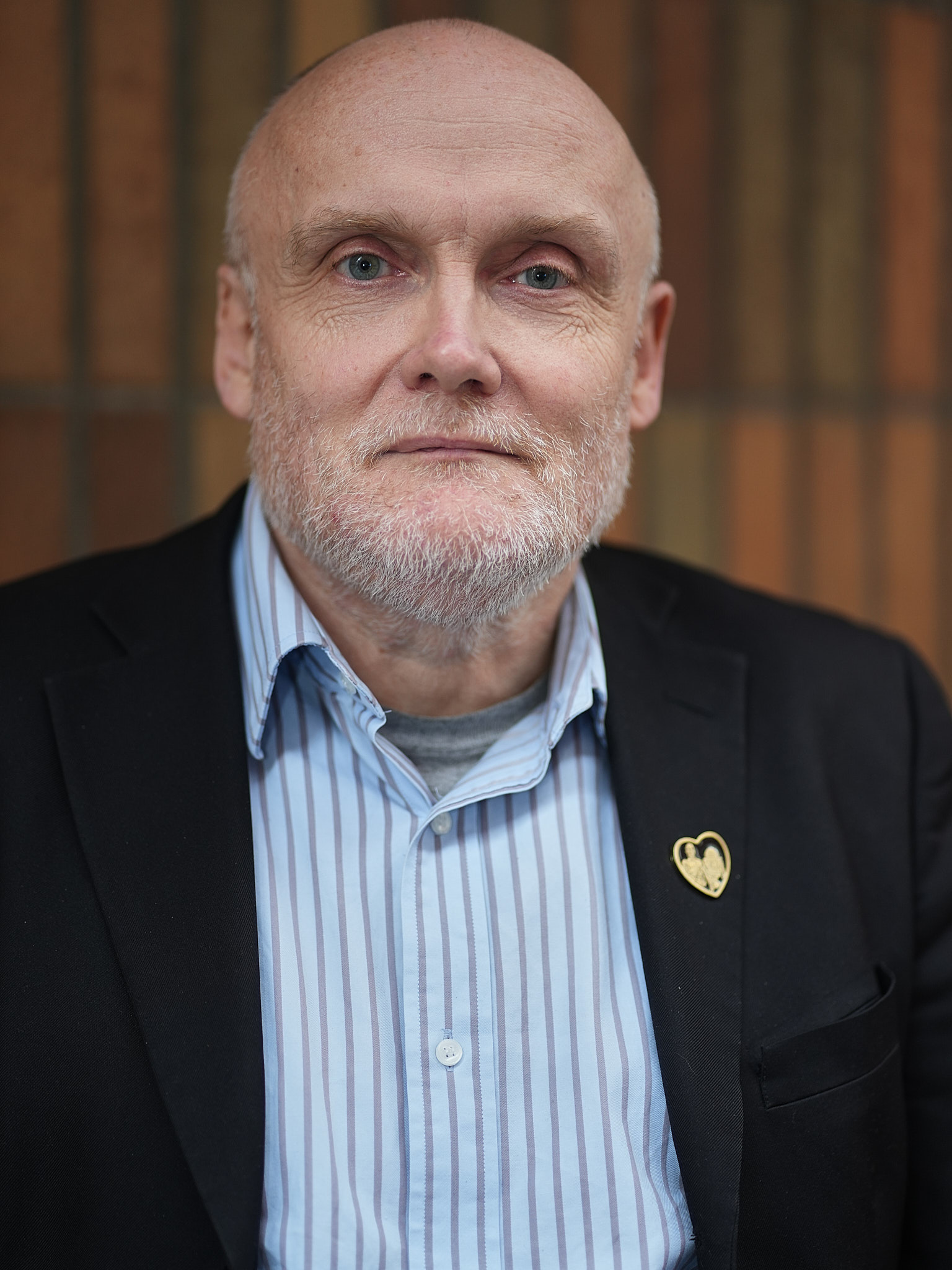
Mark’s story is not simply a story about HIV.
It is a story about survival, loss, stigma, resilience, and the quiet strength it takes to keep
living openly in a world that has not always shown compassion.
In 1997, Mark was living in Essex in south-east London and was in a relationship with his
partner, Brian. Life was moving forward normally until one decision changed everything.
After a one-night stand in East Ham, the man he had spent the night with told him the
following morning that he had full-blown AIDS.
At the time, public understanding of HIV was still heavily shaped by fear. Mark knew HIV
existed because of the club scene in London, but like many people, he never believed it
would happen to him. He describes his understanding then as “borderline.” There was little
public education rooted in humanity, and much of what people absorbed came through panic,
shame, and misinformation.
After seeking advice from the London East AIDS Network, Mark attended Old Church
The hospital in Romford for testing. In those days, people waited three months for results. ForFor
three months, he carried the uncertainty alone while also having to return home and tell his
partner, there was a possibility he was HIV positive.
When the doctor finally confirmed the diagnosis, Mark remembers not breaking down. His
response was practical, direct, and deeply revealing of his character. He simply asked:
“What can you do for me?”
The doctor explained that the combination HIV medication had only recently become available.
Mark was immediately started on what was then considered aggressive treatment: 27 tablets a
day, including AZT and other early antiretroviral medications. The side effects were brutal.
He developed a severe head-to-foot rash. He experienced months of diarrhoea, night sweats,
nausea, exhaustion, and the psychological effects of early HIV medication. His CD4 count
had fallen to just 12, and his viral load was one and a half million. At that point in the
epidemic, those numbers carried terrifying weight.
Yet even then, Mark continued trying to live his life.
He worked while managing overwhelming medication side effects. Some treatments left him
so disoriented that he described feeling as though he was “on the ceiling” by lunchtime. Like
many people living with HIV during that era, survival came with a punishing physical cost.
The medications that kept people alive often made everyday life extraordinarily difficult.
But the virus itself was not the only thing Mark had to survive.
Three years after his diagnosis, Mark secured a job at an arts centre in South London as a bar
manager. Wanting to be honest, he disclosed to his employer that he was gay and living with
HIV. His manager reassured him there would be no problem.
Two weeks later, he was fired.
There were no warnings. No disciplinary process. No legitimate explanation.
What followed was emotionally exhausting. With support from the Terrence Higgins Trust,
Mark pursued legal action under discrimination legislation. The court process dragged on for
weeks, leaving him mentally and physically drained. In the end, the case was settled out of
court.
For Mark, the legal outcome mattered less than the principle itself.
He wanted to stand up because he knew that if this could happen to him, it could happen to
someone else.
The discrimination did not end there.
Years later, after working as a chef for more than two decades, Mark fulfilled a lifelong
ambition and opened his own café in Southampton. He studied professionally at college,
earned catering qualifications, invested heavily in equipment, and built the business from the
ground up. His café began attracting attention and was eventually recognised as a top ten
finalist in a Barclays business competition for new businesses.
It should have been a proud moment.
Instead, local newspapers disclosed his HIV status publicly.
Soon afterwards, Mark noticed regular customers disappearing. One office that had visited
the café daily stopped coming entirely. When he asked why, he was told:
“We don’t want to catch HIV from the sausages.”
The ignorance of that statement is staggering, but for Mark, the consequences were
devastatingly real.
Fear spread through the business centre. Customers stopped coming. Debt mounted from
equipment loans and business costs. Eventually, the café collapsed, leaving Mark bankrupt
and carrying around £23,000 in debt.
This was not caused by HIV.
It was caused by stigma.
Mark’s experience exposes something deeply uncomfortable about the history of HIV
discrimination. People living with HIV were not only fighting a virus; they were fighting
ignorance, fear, isolation, and public judgment. Careers were lost. Businesses collapsed.
Relationships fractured. People were reduced to a diagnosis instead of being seen as human
beings.
And yet, despite everything he endured, Mark did not retreat from the world.
Instead, he spent years volunteering with HIV organisations across the UK, supporting others
living with the virus. He became involved with Thames Valley Positive Support and was later
invited to become one of the charity’s patrons, a role he still holds with pride.
In 2013, the organisation received the Queen’s Award for Voluntary Service, and Mark
attended Buckingham Palace in recognition of that work. For someone who had once been
treated as unemployable and untouchable because of HIV, standing in the palace represented
something far greater than ceremony. It was dignity reclaimed.
Today, Mark lives in Newcastle and remains connected to the Blue Sky Trust, an HIV support
organisation he describes as “amazing.” After decades of treatment evolution, he is now
down to a single daily tablet and has been undetectable for years.
He speaks openly about HIV, participates in exhibitions and community projects, and
continues advocating for awareness through honesty and visibility. He talks publicly because
he knows silence only strengthens stigma.
Perhaps the most powerful part of Mark’s story is that, despite all he has experienced, he still
speaks with humour, warmth, and compassion.
When asked what he would say to someone newly diagnosed with HIV today, his response
was simple:
“You’re not going to die tomorrow. Take the tablet. Get support where you can.”
There is enormous weight in those words coming from someone who has lived through the
darkest years of the epidemic, survived the toxic early medications, endured discrimination in
both employment and business, and continues to stand openly in the world.
Mark’s story matters because it forces us to confront the human cost of stigma.
It reminds us that misinformation destroys lives far beyond the virus itself.
And it reminds us that behind every HIV diagnosis is a person deserving of dignity, fairness,
respect, and the simple right to live without fear of discrimination.
Share this story on: