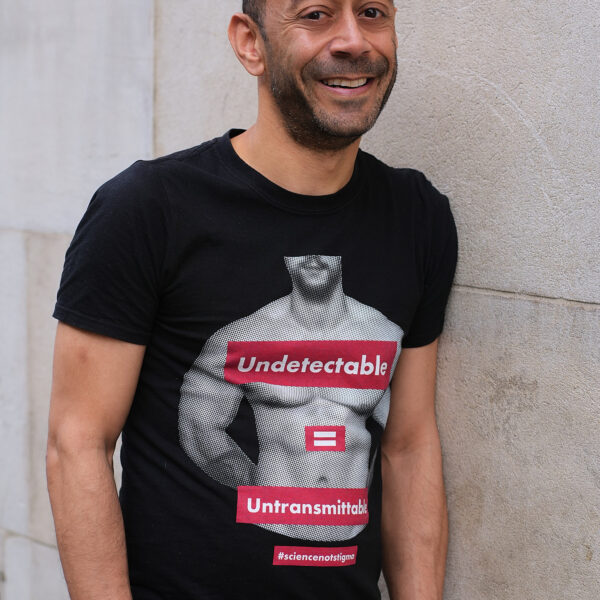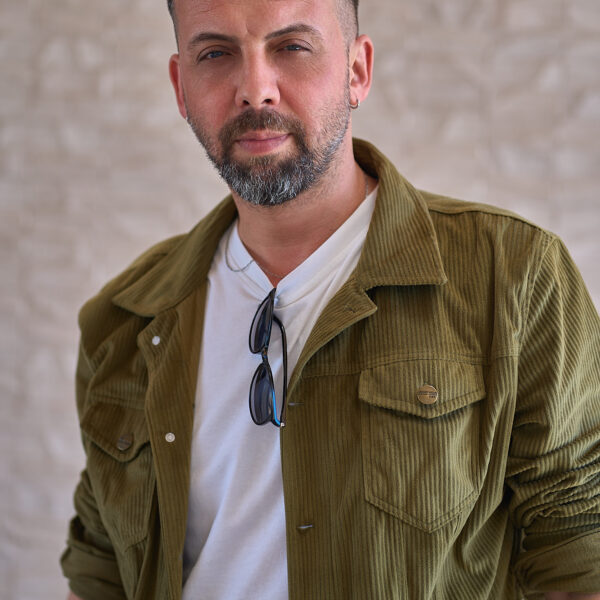
Kagan
My name is Kagan, and my work has always been…
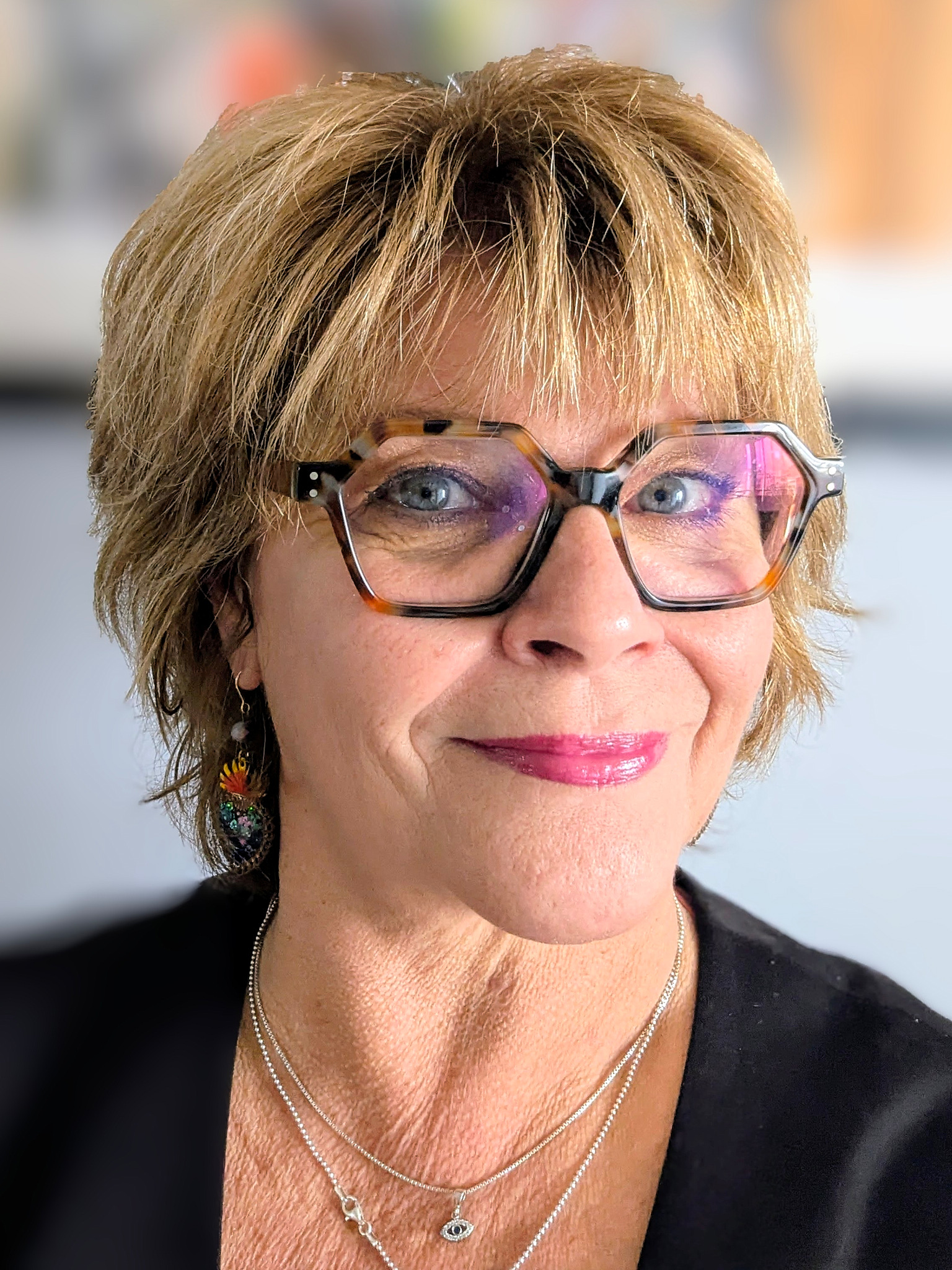
Mimi (Mireia’s Journey)
There are some people who speak about living with HIV in a way that immediately asks you to stop, listen, and understand. Mimi is one of those people.
She gave her time generously, openly, and with extraordinary honesty to share what it has meant to live through more than four decades of HIV. In doing so, she did not simply recount medical facts or dates. She opened the door to a life shaped by uncertainty, survival, love, loss, courage, and a determination to keep going when the world around her offered very few answers.
Mimi has French/Spanish roots and was born in Paris in December 1962. She describes herself as someone shaped by languages, literature, contemporary art, photography, music, curiosity, and movement. From an early age, she was drawn to the world beyond France, to English, to Spanish, to culture, to music, to art. These details matter because they remind us that before any diagnosis, before the fear, before the stigma, there was simply a young woman living her life, building her identity, and imagining her future.
She believes she contracted HIV in the early 1980s, long before most people properly understood what HIV was, and before many in Europe even realised the virus was already spreading. At that time in Paris, there were whispers of what was being described elsewhere as a “gay cancer,” but there was little public clarity, and even less meaningful information. Within Mireia’s own circle, friends began to fall ill. What had once seemed distant and happening somewhere else suddenly became frighteningly close.
When testing became available in Paris in 1985, Mimi decided to be tested. She did not want to hide from the truth. She wanted to know. What followed was a moment that would stay with her for the rest of her life. Sitting with doctors and a psychologist, she was told to prepare herself. She remembers being given the kind of prognosis so many people received in those years, six months, perhaps a year. But among those devastating words, one sentence stood out: “Maybe more. We don’t know.”
That phrase we don’t know became her motto.
In those four words, she found a reason not to surrender.
One of the most striking things about Mimi’s story is that, for many years, HIV did not make her outwardly ill. She remembers those years not as years of sickness, but in many ways as years of life. She was living in Spain. She had love in her life. She had the sea, the sun, horses, work, freedom, movement, food, joy. She describes a life that, despite the diagnosis she carried, still contained beauty and fullness. For roughly a decade, she remained well. She attended the hospital for regular checks, but the shadow of HIV had not yet overtaken her body.
That part of her story is important because it challenges the simplistic narrative that people living with HIV are defined only by suffering. Mireia’s life did not stop at diagnosis. She continued to live. She continued to love. She continued to build a meaningful life.
Then, in the mid-1990s, everything changed.
Following an accident in Spain and after receiving a tetanus vaccine in the hospital, Mimi noticed a dramatic shift in her health markers. Whether connected or not, she cannot say with certainty, but what followed was sudden and alarming. Her CD4 count, once strong, fell rapidly. Within months, it dropped from over 1,000 to 400, then 250, then 100, and eventually to 28. Yet even then, what confounded everyone around her was that she still did not appear ill. She was not bedridden. She had no major opportunistic infections. She was still functioning, still working, still moving through life. Her doctors could not understand how someone with such dangerously low immunity could remain outwardly so well.
At a time when there were still no reliable treatment pathways and when many people were dying around her, Mireia found herself in a surreal position: medically fragile, but physically still standing.
She returned to Paris, where she was followed at Hôpital Pasteur. She continued to work. She refused to retreat from life. She could have stepped away and accepted disability support, but instead, she kept going. That choice seems to run throughout her story, not denial, but defiance; not carelessness, but a fierce attachment to living.
Still, surviving physically did not protect her from the emotional cost of those years.
One of the deepest truths in Mimi’s story is that trauma did not come only from her own body, but from what she witnessed happening all around her. She speaks with raw emotion about the hospital years, about the patients she met, the friendships formed in waiting rooms and wards, and the grief of seeing people change so quickly that they became almost unrecognisable. She lost friends. She lost people she loved. She watched doctors, nurses, and patients all trying to stay strong in the face of relentless death. In those moments, everyone was crying together. There was no distance between staff and patients. There was only human pain, shared in real time.
These memories still sit heavily with her. Even now, decades later, she speaks of them not as distant history, but as something still alive in her body and mind. That is one of the most important dimensions of long-term survival: surviving is not the same as being untouched.
And yet, despite everything, Mimi continued to choose life again and again.
One of the most remarkable parts of her journey is her decision to become a mother. At a time when women living with HIV were routinely warned against pregnancy and often met with fear rather than support, Mimi and her husband decided they wanted a child. She was told, in brutal terms, that she would likely die during pregnancy, or during childbirth, and that the baby might not survive either. But they chose hope. They chose life.
Her daughter Jessica was born in March 1992. Mimi remembers that time with enormous emotion. Her pregnancy was healthy. She remained well. Her daughter was born safely and later confirmed HIV-negative. This was not just a medical milestone. It was a profound personal act of resistance against everything she had been told was impossible.
Motherhood became another chapter in a life that refused to follow the script others had written for her.
As treatment evolved, Mimi entered early protocols, including AZT and later combination therapy. The treatment was harsh. She describes side effects that were deeply uncomfortable, burning skin sensations, hot flushes, metallic taste, swelling, but she endured them because she understood she had no real alternative. She adjusted, persisted, and eventually benefited from the arrival of triple therapy.
Mimi is an HIV–HCV long-term survivor, a part of her journey she describes as one of the most difficult. Managing treatment meant carefully balancing medications due to liver fibrosis, ensuring she did not take too much while still maintaining control of both conditions.
In time, the results were extraordinary. Her CD4 count recovered. Her viral load became undetectable. Today, she has been on monotherapy for over 15 years, with excellent outcomes, and her CD4 count is now approximately 1,350. After everything she has lived through, that reality carries enormous weight.
But her story is not only about medicine. It is also about silence, invisibility, and the absence of representation. Mimi speaks movingly about how alone she often felt, particularly as a heterosexual woman and long-term survivor. While she acknowledges the important work of organisations and activists, she is honest about the fact that she did not always see herself reflected in the people around her. In those years, she needed visible role models. She needed to know that people like her existed and could survive. Too often, she found no one.
That invisibility matters. It shapes memory. It shapes identity. It shapes what people believe is possible for themselves.
Mimi is also someone deeply engaged with knowledge. She has not simply lived with HIV; she has sought to understand it. She read scientific literature, followed research developments, educated herself on treatment, immunity, nutrition, and long-term survival. She speaks passionately about the importance of people living with HIV being properly informed, and she carries a sense of frustration about how many people, even decades later, still have not been given the information they need to live fully and without unnecessary fear. She believes ignorance continues to harm people, not only public ignorance, but sometimes the silence within healthcare itself.
What also comes through strongly in her story is her refusal to see herself as passive. Mimi does not speak from a place of self-pity. She is candid about her sensitivity, about trauma, about grief, and about how much she still has to process. She now attends psychotherapy through her hospital and is beginning to work more consciously through the psychological burden of long-term survival. She is also writing her story, encouraged by her daughter, so that what happened to her generation is not forgotten.
That act of writing feels deeply significant. Because for so many people who lived through the darkest years of HIV, there was little time, little space, and often little permission to tell the full truth of what they endured.
Mimi’s voice matters because it carries history. Not abstract history, but lived history. The kind that includes the early confusion of the epidemic, the cruelty of prognosis, the fear of watching others die, the loneliness of invisibility, the intimacy of survival, and the stubborn insistence on joy, love, sex, motherhood, work, movement, and future.
She speaks not as a victim, but as someone who has fought hard to remain fully herself. There is dignity in the way she tells her story. There are moments where she feels upset, there is humour, there is intelligence, and there is strength. Above all, there is honesty.
Mimi’s journey with HIV is extraordinary, not because it is neat or simple, but because it is so profoundly human. It is a story of endurance without glamour, resilience without performance, and survival without forgetting the cost.
I am deeply grateful to Mimi for giving so much of herself in sharing this journey. Her story is one of immense value. It deserves to be heard, held with care, and remembered.
Share this story on: