Kagan
My name is Kagan, and my work has always been…
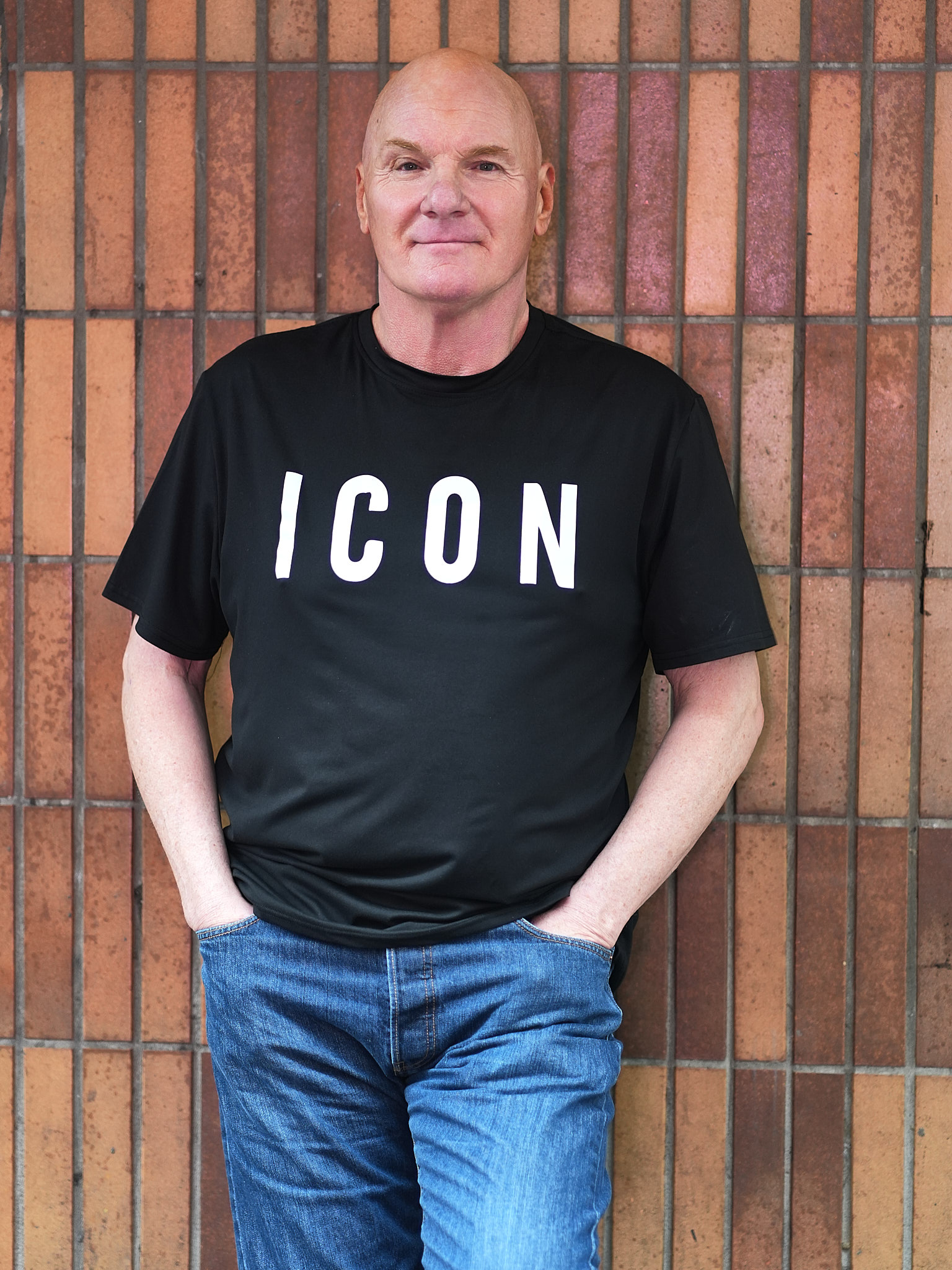
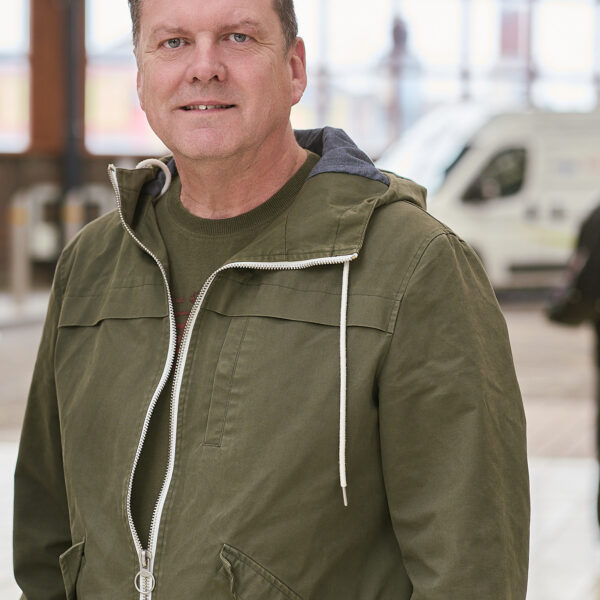
Nigel Bullock says I describe myself as an HIV baby because I’ve only been diagnosed for three years. 2023. And it was by accident. HIV entered his life completely unexpectedly.
There had been no illness. No warning signs. No dramatic moment that made him fear something was wrong. He was healthy, working full-time as a senior legal caseworker for the Ministry of Justice in Newcastle, and living a settled life with his partner of 24 years. By his own account, he had barely been sick in years.
The diagnosis came through something almost routine: a home STI testing kit.
At the very end of the form was a question asking whether he would also like to be tested for HIV. Nigel remembers thinking, almost casually, “Well, I haven’t got HIV, so I might as well.” He placed three small drops of blood onto the card and posted it away without another thought.
But one sentence on the form stayed in his mind:
If your result is negative, you will receive a text message. If your result is positive, we will call you personally.
A week later, at nine o’clock on a Friday morning, his phone rang.
The nurse on the other end of the line spoke gently and carefully. She explained that all of his STI results had returned negative, but that his HIV test had come back positive.
Nigel describes the moment simply:
“My heart just sank.”
At first, he didn’t believe it. He convinced himself there had been some kind of mistake. He held onto the hope that the second confirmatory test on Monday would prove everything wrong. But somewhere beneath that denial was another feeling quietly settling in: the understanding that his life had changed.
What makes Nigel’s story so powerful is not simply the diagnosis itself, but the extraordinary way he chose to respond to it.
He speaks openly about the fear that initially crossed his mind. Like many people diagnosed with HIV, the shadows of the 1980s still lingered deep within him. Nigel had grown up during the height of the AIDS epidemic. He remembers the terrifying tombstone campaigns on television, the newspaper headlines calling it “the gay plague,” and the fear that consumed entire communities.
As a teenager coming to terms with his sexuality in the mid-1980s, HIV was presented to him not as a manageable health condition, but as a death sentence.
Those memories do not disappear easily.
And yet, within days of his diagnosis, Nigel made a conscious decision that would completely reshape the direction of his life.
He realised he had two choices.
He could allow HIV to consume him emotionally, isolate himself, and live in fear, or he could educate himself, speak openly, and challenge the stigma he himself had grown up with.
He chose the second path.
That decision became the beginning of something far greater than he could ever have imagined.
Nigel immersed himself in learning about HIV. He researched constantly, connected with support organisations, and eventually became involved with the Blue Sky Trust in Newcastle, where he now volunteers and advocates for others living with HIV. Through training, peer support, public speaking, and community education, he transformed his diagnosis into something deeply human and deeply purposeful.
One of the most striking aspects of Nigel’s story is the honesty with which he speaks about stigma.
He does not minimise the emotional impact of disclosure. He speaks candidly about losing contact with his sister after telling her about his diagnosis, a painful silence that still remains. But he also speaks about something equally important: compassion, understanding, and the power of openness.
He recalls the unexpected tenderness of healthcare workers, the support of his employer, the kindness of colleagues, and the overwhelming love he received after publicly sharing his HIV status online.
Rather than hiding, Nigel chose visibility.
One evening, after weeks of wrestling internally with who to tell and how to tell them, he wrote a long social media post openly disclosing that he was living with HIV. He expected judgment. Instead, he received messages of encouragement from old school friends, strangers, colleagues, and people across the world.
Many reached out privately, asking questions they had never felt safe enough to ask before. Others disclosed their own diagnoses for the very first time.
That moment changed something in him profoundly.
Nigel realised that visibility has power.
Not because HIV defines him, but because honesty allows people to finally see the human being beyond the diagnosis.
Again and again throughout his story, Nigel returns to one central belief:
“HIV is the virus. Stigma is the disease.”
It is a statement shaped not by theory, but by lived experience.
He speaks passionately about the language people use around HIV. He challenges phrases like “suffering with HIV” or “coping with HIV,” insisting instead that he is living and thriving with HIV. He wants people to understand that modern HIV treatment has transformed what life can look like after diagnosis.
Today, Nigel takes one tablet a day.
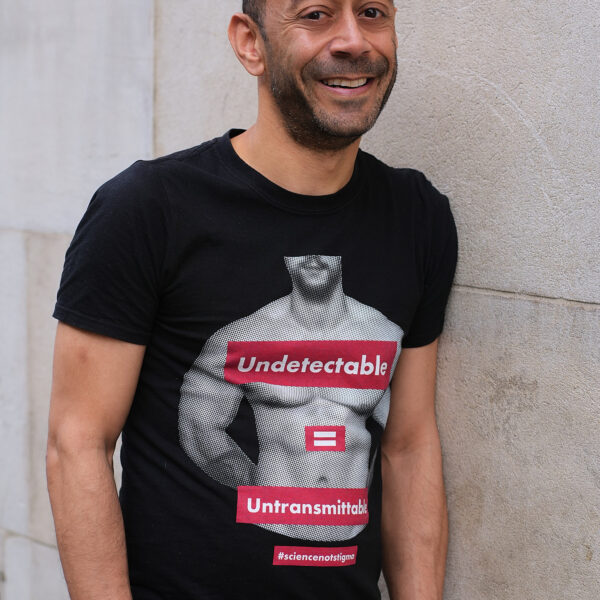
Just 27 days after beginning treatment, he became undetectable, something he remains deeply proud of. He talks openly about U=U (Undetectable = Untransmittable), determined to help others understand that people living with HIV on effective treatment cannot sexually transmit the virus.
For Nigel, education is no longer optional. It has become a responsibility.
He gives positive living talks at his workplace, the Ministry of Justice. He speaks in schools, organisations, and public forums. He has appeared on BBC interviews and podcasts. He answers private messages from frightened strangers around the world who feel they have no one else to turn to.
And perhaps most movingly of all, Nigel speaks about HIV not as the end of his life, but as something that unexpectedly gave his life deeper direction.
Before his diagnosis, he describes himself as simply “coasting along.” Life was comfortable, stable, and predictable. But after the initial shock passed, something shifted.
He found purpose.
He found community.
He found a voice.
And through that voice, he has become a source of reassurance for others who are standing exactly where he once stood: terrified, overwhelmed, and convinced that their lives are over.
If someone newly diagnosed came to him today, Nigel says he would simply take their hand and tell them:
“It is nowhere near as bad as what you are imagining.”
There is something profoundly powerful about the way Nigel tells his story. He does not deny the fear, the stigma, or the pain that HIV can still bring. But he refuses to allow those things to define what living with HIV means.
Instead, he offers something much more human.
Hope.
Not false optimism. Not denial. But real, grounded hope built from lived experience.
Through his openness, humour, honesty, and determination to educate others, Nigel is helping dismantle decades of fear surrounding HIV. He is reminding people that behind every diagnosis is a full human life: a person with work, relationships, history, dreams, humour, vulnerability, and value.
A blood result can never tell the full story of a human being.
Nigel understands that deeply.
And that is exactly why he continues to speak.
Share this story on: