Kagan
My name is Kagan, and my work has always been…
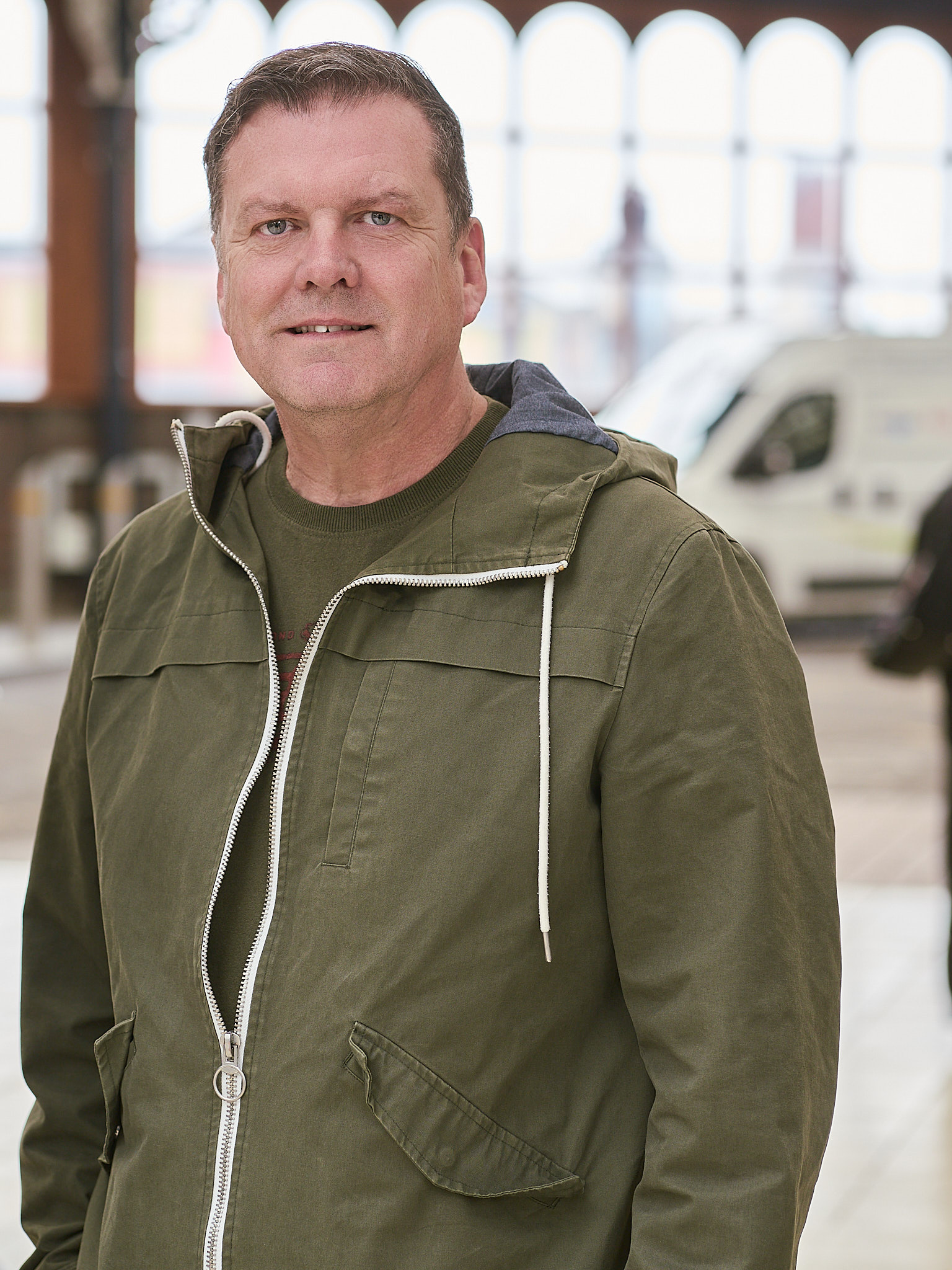
My name is Christopher Sarson. I’m 57 years old, and HIV has shaped my life in ways I never imagined it would.
When I found out I was HIV positive in 2012, it came completely out of the blue. I was walking through Brighton one afternoon and happened to pass the Terence Higgins Trust, where they were offering rapid HIV testing. I hadn’t planned on going in. I just saw it, thought to myself that I hadn’t tested in a few years, and decided to do it there and then.
At the time, I was in a relationship and genuinely believed everything would be fine. I remember sitting there calmly while they did the finger-prick test, expecting to be told I was negative.
But I noticed something in the face of the man doing the test. I’ve always been very good at reading body language. He glanced down at the result, then back up at me, and something changed in his expression. He told me he’d be back in a few minutes.
The moment he walked back into the room, I said to him, “You’re going to tell me I’m HIV positive, aren’t you?”
He looked surprised and asked how I knew. I told him it was written all over his face.
And then he said yes.
I don’t think anything truly prepares you for hearing those words, no matter how much experience you think you have around HIV.
What made it even harder was that the next morning, I was flying to Dublin with the Brighton Gay Men’s Chorus for the Various Voices festival. At the same time, my partner’s mother was dying. Everything seemed to collide at once.
I didn’t tell him immediately because I couldn’t bear to add more pain to what he was already going through. So I boarded that plane carrying this enormous secret by myself. I remember walking around Dublin feeling completely overwhelmed. Eventually, I confided in a couple of close friends from the chorus because I think it all became too much to hold in alone.
When I returned home, I told my partner. Thankfully, he tested negative.
But my relationship with HIV actually began long before my own diagnosis.
My uncle was HIV positive back in the late 1980s, during the darkest years of the epidemic. Through him, I became involved with Leicestershire AIDS Support Services, where I volunteered as a buddy for people living with HIV and AIDS.
At the same time, I was building my career as a funeral director.
Very quickly, those two parts of my life became deeply intertwined.
I was caring for people while they were alive, helping them with shopping, companionship, hospital visits, and emotional support, and then, heartbreakingly, I was often arranging their funerals too.
The late 80s and early 90s were devastating. So many people were dying. There was fear everywhere, and the stigma surrounding HIV was brutal.
One thing that has stayed with me forever was seeing bodies arrive in mortuaries covered in biohazard warnings simply because the person had died from AIDS. Families were frightened. Funeral directors were frightened. Sometimes parents were even told they couldn’t see their own child one final time.
I could never accept that.
So I stepped in.
I would personally go into the mortuary, open the body bags, wash and dress the person properly, and make sure their family could say goodbye with dignity. I’ll never forget the relief and gratitude of parents who thought they would never be allowed to see or touch their son again.
Those moments never leave you.
My parents were incredible through all of it. Long before acceptance was common, they openly supported people living with HIV and families struggling to understand that their children were gay. My dad worked on building sites and would challenge homophobia directly whenever he heard it.
When I eventually told him I was HIV positive myself, he stared at me for a moment and said, “How did you get that then?”
Then he paused and quietly said, “Don’t answer that.”
He stood up and hugged me.
That moment meant everything to me.
Years later, after another relationship had ended, I met the man who is now my husband. The funny thing is, when we first spoke online, and I disclosed that I was HIV positive and undetectable, he disappeared completely. I never heard from him again.
Then, about three years later, he suddenly messaged me out of nowhere. The first thing he said was, “I want to apologise.”
He admitted that he had been frightened because he didn’t really understand HIV at the time. But he had educated himself since then and realised his reaction had come from fear and ignorance. He asked if I would meet him.
Thankfully, I said yes.
Just before the pandemic, he proposed to me at the top of the Eiffel Tower in Paris. We got married two years ago.
Sometimes I think life has a strange way of bringing people back when the timing is finally right.
Alongside everything else, I’ve now spent nearly forty years as a funeral director. I arrange funerals, embalm people, support grieving families, and try to give people the goodbye they deserve. I genuinely believe funerals should properly reflect the person. They should celebrate life, personality, humour, love, and individuality.
And there has always been humour in my life too.
Over the years, I also performed as a drag queen under the name Vera Re Thrust. I loved performing. I loved the creativity and the joy of it. In communities that have experienced so much grief and loss, I think laughter and performance become incredibly important forms of survival, too.
When people are newly diagnosed with HIV now and tell me they’re terrified, I always tell them the same thing:
I’m living proof that life continues.
Of course, the diagnosis is a shock. Of course, it changes you emotionally. But HIV is no longer the death sentence it once was. You can still fall in love, get married, work, travel, laugh, and build a future.
I always tell people we’re all on the same train in life. It just depends on what ticket you’ve got.
Share this story on: