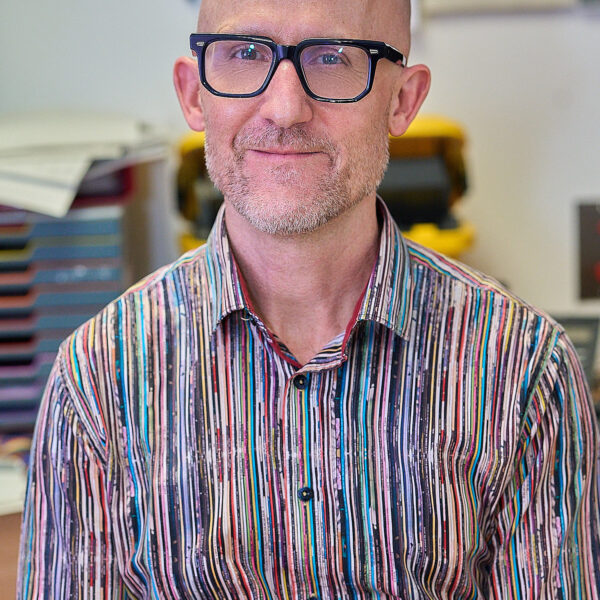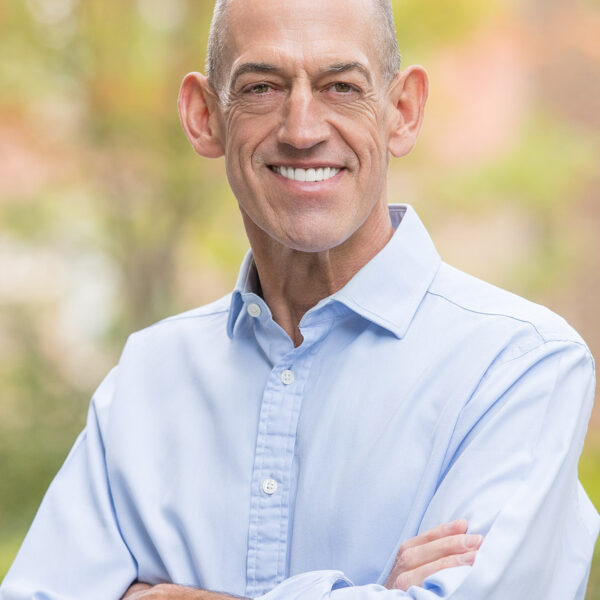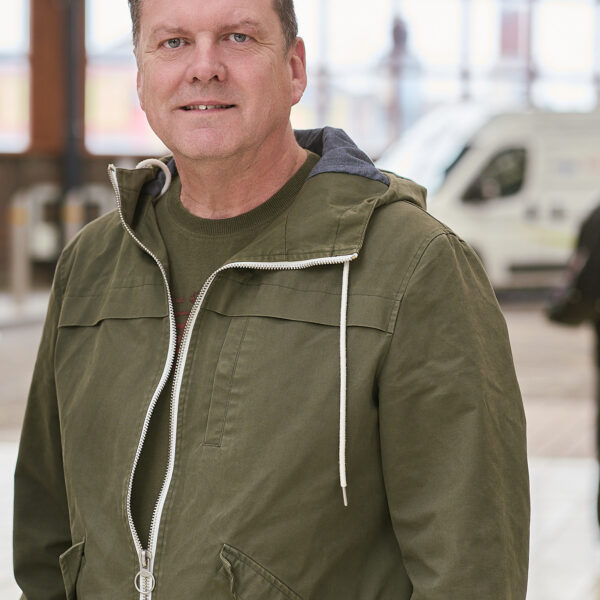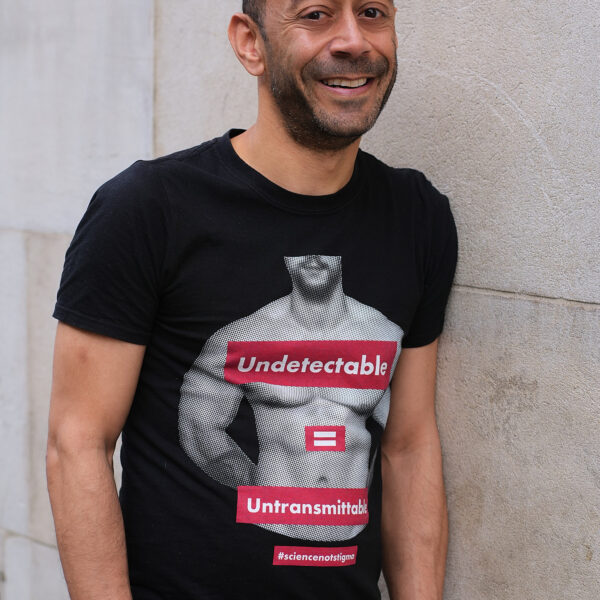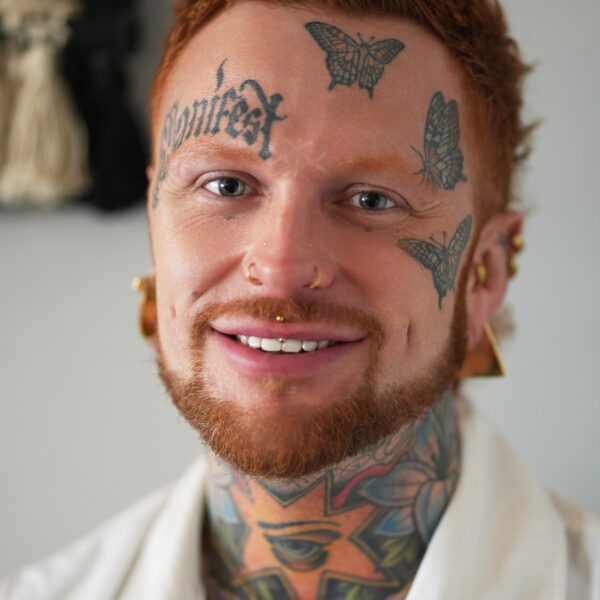
Kagan
My name is Kagan, and my work has always been…
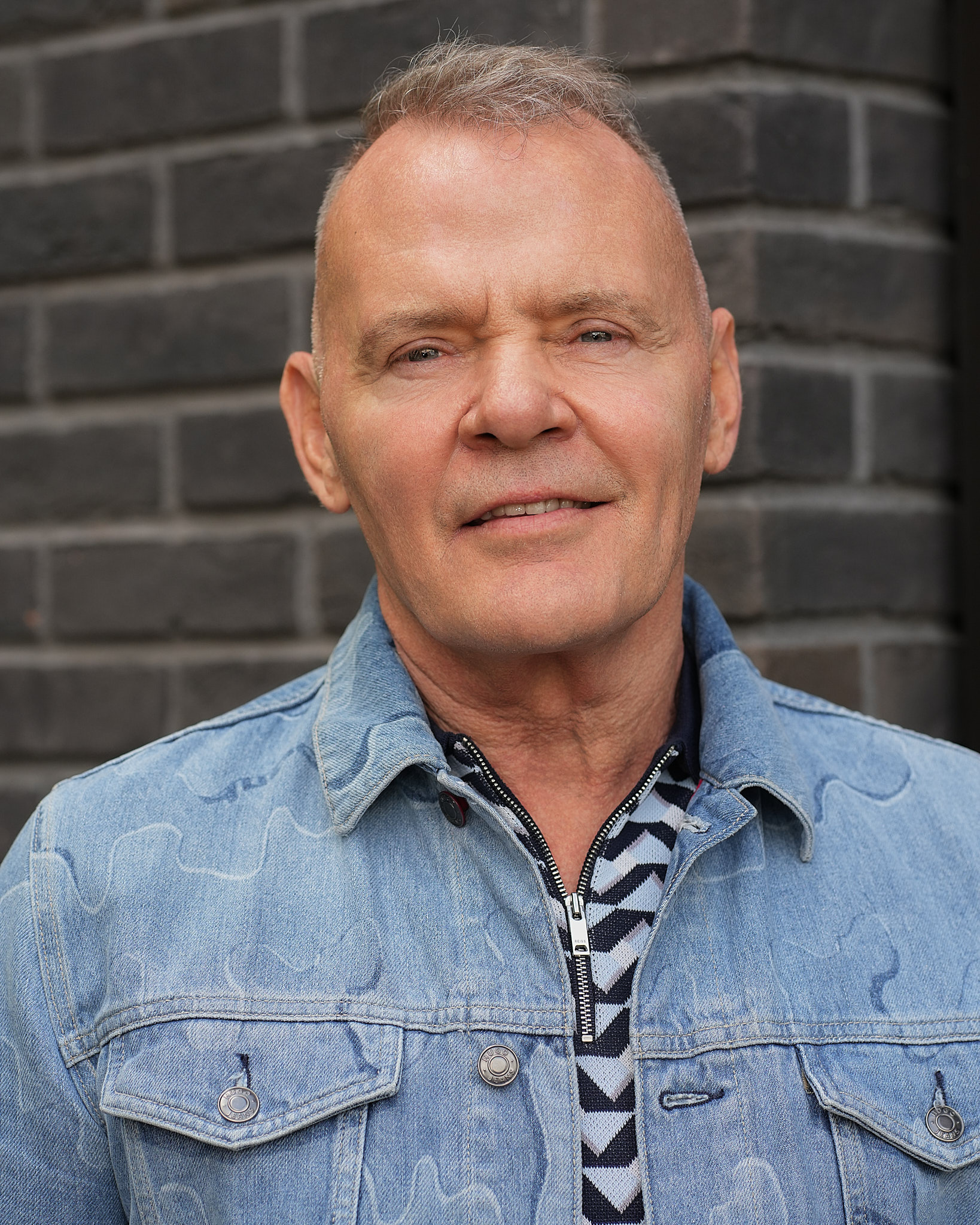
My name is Shaun Mellors, and I have been living with HIV for forty years.
I was diagnosed in 1986 when I was just twenty years old.
At the time, HIV was not simply a medical diagnosis it was a source of fear, uncertainty, misunderstanding, and profound stigma. Very little was known about the virus, treatments did not exist, and for many people, an HIV diagnosis was seen as a death sentence. It was a frightening time to be young and to suddenly find yourself facing an unknown future.
I was a university student in Johannesburg, South Africa, when I became seriously ill. What began as a period of unexplained sickness quickly escalated. I was losing weight, my glands were swollen, and my body was struggling. On Christmas Eve, I collapsed at work and was rushed to the hospital.
What happened next changed the course of my life forever.
A doctor examined me briefly before leaving the room. A few minutes later, she returned and delivered words that no young person is ever prepared to hear. She told me that she believed I had AIDS and that I probably only had a few months left to live.
I remember looking up at the clock on the wall of the emergency room.
It was ten past four in the afternoon.
Forty years later, I can still see that clock. I can still remember the feeling that washed over me in that moment. It was as though time stopped. Everything I had imagined for my future, my studies, my ambitions, my dreams, and my relationships suddenly disappeared. I felt as if my life had ended before it had truly begun.
I was admitted to an isolation ward. Large biohazard signs were placed on my door. Anyone entering the room, including my parents, had to wear masks, gowns, and protective clothing.
Looking back now, I understand that much of this was driven by fear and a lack of understanding about HIV. But at twenty years of age, lying in a hospital bed and watching people dress in protective clothing before entering my room, it felt as though I had become something dangerous. Something to be feared.
I was terrified.
I was confused.
And above all, I felt profoundly alone.
It was Christmas Eve. Families were gathering together, celebrating, exchanging gifts, and sharing meals. Meanwhile, I lay in that hospital room trying desperately to make sense of what was happening to me and wondering whether I would live to see another Christmas.
At one point, a choir passed through the ward singing Christmas carols. They stopped outside my room and sang Away in a Manger.
It was a beautiful gesture, but it became forever linked to one of the darkest moments of my life.
Even today, hearing that hymn instantly transports me back to that hospital room to the fear, the uncertainty, the loneliness, and the overwhelming sense that my future had been stolen from me.
When I was eventually discharged, I left the hospital believing I was going to die.
I withdrew from university and returned home. I began preparing myself for what I thought would be the final months of my life. Every decision, every conversation, every day was overshadowed by the expectation that there would not be many more.
But then something unexpected happened.
Six months later, I was still alive.
Slowly, my health began to improve. Day by day, I grew stronger. And as my body recovered, something changed within me.
I realised that if I was going to survive, I needed to find a way to live.
I could not allow HIV to become the only thing that defined me. I could not spend whatever time I had left waiting to die.
I had to learn how to live with HIV rather than surrender to it.
The years that followed were incredibly difficult.
There were no effective treatments. Stigma was everywhere. Fear surrounded every conversation. Many of us carried enormous shame and isolation. We often sat silently in clinic waiting rooms, avoiding eye contact because even acknowledging one another felt dangerous.
Yet it was through those shared experiences that I discovered something that would ultimately transform my life: community.
Little by little, conversations began.
People started sharing their fears, their stories, and their hopes. We realised that although HIV had isolated us individually, together we could support one another.
Those conversations eventually led me to help establish one of the first HIV support groups at Johannesburg General Hospital.
For many people, including myself, those support groups became lifelines.
They reminded us that we were not alone.
They reminded us that we still had value.
They reminded us that even in the midst of uncertainty, hope was possible.
As the epidemic continued to grow, I became increasingly involved in advocacy. I wanted people to see the human beings behind the headlines.
Too often, people living with HIV were portrayed as statistics, victims, or warnings. The world rarely saw our humanity.
But we were not just patients.
We were students, teachers, artists, parents, partners, friends, and colleagues.
We had dreams.
We had ambitions.
We had futures worth fighting for.
I became one of the first people in South Africa to publicly disclose my HIV status. It was one of the most difficult decisions I have ever made.
Visibility came at a cost.
One of the greatest regrets of my life is that my parents learned I was living with HIV through a newspaper campaign before I had found the courage to tell them myself.
That pain has never entirely left me.
But I also understood that visibility mattered.
If people living with HIV remained invisible, stigma would continue to thrive.
By sharing our stories, we challenged fear with understanding and prejudice with compassion.
I travelled throughout South Africa, speaking with healthcare professionals, community groups, and policymakers. I shared my personal journey not because it was easy, but because I believed that stories could change hearts and minds in ways statistics never could.
Together with friends and fellow activists, I helped establish Body Positive (which became NAPWA) South Africa, creating spaces where people living with HIV could find dignity, support, understanding, and hope.
Those years were marked by unimaginable loss.
We attended more funerals than anyone should ever have to attend.
We lost friends, colleagues, partners, and community members.
We sat beside hospital beds and hospice beds.
We supported people whose families had abandoned them.
We witnessed extraordinary suffering.
Yet amidst all that loss, we also witnessed extraordinary courage.
Again and again, I saw people choose hope when despair would have been easier.
For many of us, activism became a form of treatment long before medication existed.
It gave us purpose.
It gave us a connection.
It gave us hope.
Most importantly, it gave us a reason to keep going.
In 1996, while working internationally with the Global Network of People Living with HIV, I became seriously ill once again.
It was around the time of the International AIDS Conference in Vancouver, where groundbreaking data on the first highly effective antiretroviral therapies were being presented.
I remember sitting in the conference hall listening to the results.
For years, we had watched friends die. For years, we had lived under the shadow of uncertainty. For years, survival had often felt like a matter of luck.
Then suddenly, for the first time, there was genuine hope.
My friend Jack Singh and I looked at one another and said exactly the same words:
“We’re going to live.”
It is difficult to describe what that moment meant.
For the first time since my diagnosis, the future felt real.
For the first time, I could imagine growing older.
For the first time, survival felt possible.
I began treatment later that year and became undetectable soon afterwards.
I have remained undetectable ever since.
Over the decades that followed, my work took me around the world. I witnessed communities challenge governments, demand access to treatment, confront discrimination, and fight for human rights.
I saw the extraordinary power of collective action.
I also experienced discrimination personally. I was denied employment opportunities, refused visas, and treated differently simply because I was living with HIV.
But those experiences never weakened my commitment.
If anything, they strengthened it.
They reinforced my belief that injustice must always be challenged wherever it exists.
Today, forty years after being told that I only had months to live, I remain deeply committed to ensuring that the voices of people living with HIV are heard.
Whether through advocacy, community engagement, mentoring, or my work with ViiV Healthcare, I continue to believe that people living with HIV must remain at the centre of the HIV response.
Because no one understands the realities of living with HIV better than those who live it every day.
If there is one lesson I have learned throughout this journey, it is that HIV is only one part of who a person is.
It does not define our worth.
It does not define our potential.
And it does not define our future.
To anyone newly diagnosed today, I would say this:
Learn about HIV. Understand it. Take care of your health and seek support when you need it.
But never allow HIV to take ownership of your dreams.
Never allow it to limit your ambitions.
Never allow it to diminish your relationships or your sense of self.
You are far more than your diagnosis.
Forty years after being told I had only months to live, I am still here.
Still living.
Still loving.
Still advocating.
Still believing that a world free from stigma, discrimination, and inequality is possible.
And still believing that every person living with HIV deserves to be seen not for their diagnosis, but for the fullness of who they are.
Share this story on: