Kagan
My name is Kagan, and my work has always been…
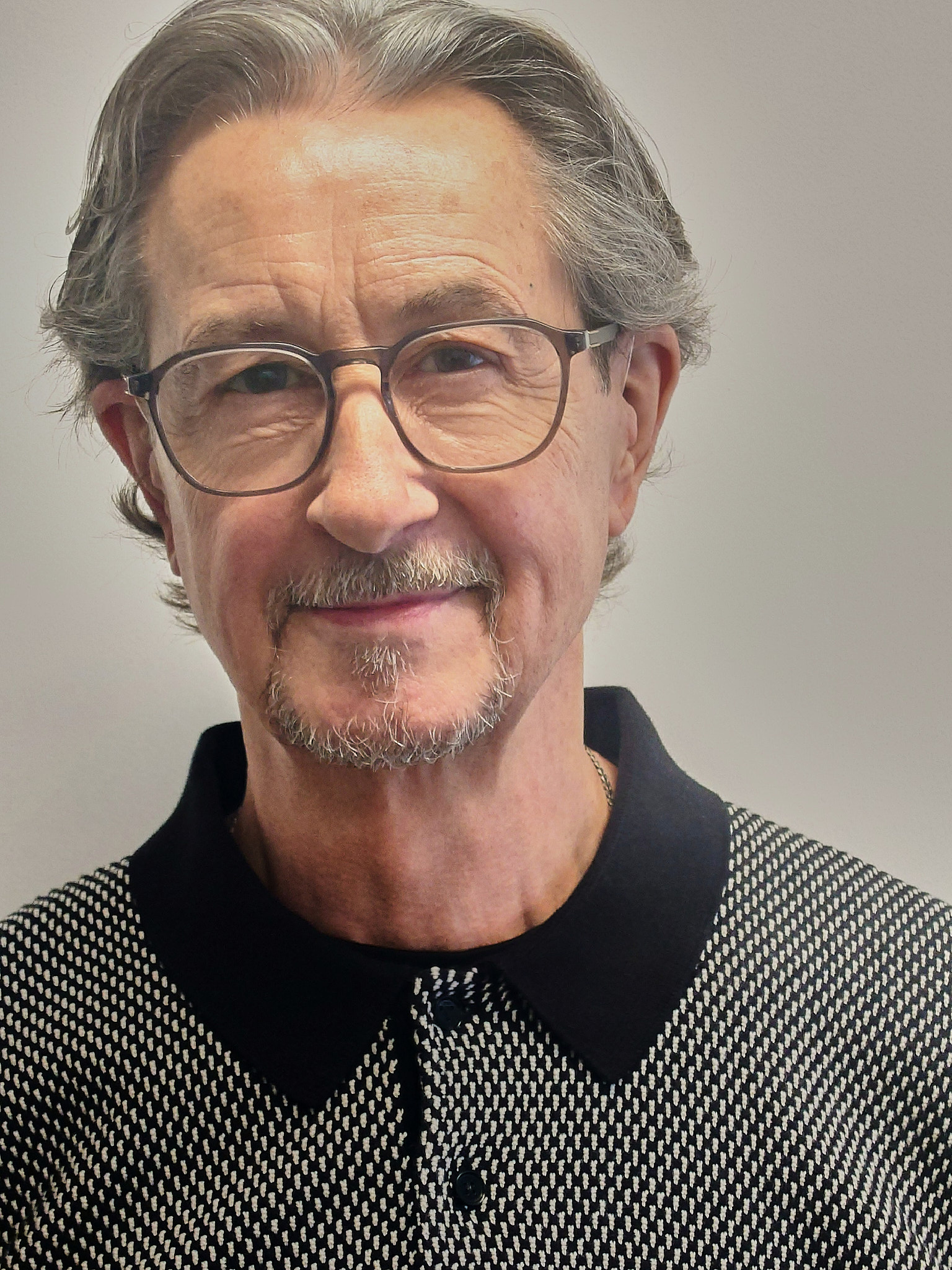
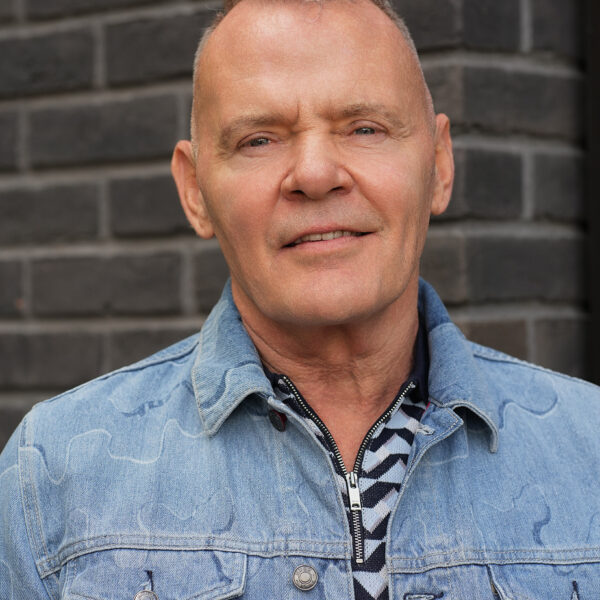
My name is Rob Hammond, and I’m 70 years old.
To understand how HIV became part of my life, I really need to go back to the 1980s. At that
time, I was working in the casino industry, which naturally had a large gay community within
it. Some of the friendships I made back then have lasted more than forty-five years and are
still deeply important to me today.
But when HIV arrived, it changed everything.
A lot of my friends contracted HIV, and far too many of them died. It was an incredibly
painful time. There was fear everywhere, grief everywhere, and for many of us, it felt like we
were watching an entire generation disappear in front of our eyes.
At the same time, Britain was going through the Thatcher years. Before then, I wouldn’t
really have described myself as political, but suddenly I found myself marching against
Section 28, marching against the poll tax, and nearly getting arrested during protests. Looking
back now, I realise HIV and the political climate of that era completely changed me. They
forced me to become more outspoken, more aware, and more engaged.
One friend in particular left a profound mark on my life. What I learned from him was how to
face death with grace and bravery. He accepted the reality of what was happening to him in a
way that was both heartbreaking and deeply inspiring.
He even planned his own funeral well in advance.
It wasn’t religious. After the service, we were all asked to change into party clothes, and there
was a marquee in Battersea Park with a string quartet and a buffet. It was extraordinary.
There was sadness, of course, but there was also beauty, humanity, and celebration. Even
Now, all these years later, I still think about it.
Eventually, I left the casino industry and started working in personnel within the NHS. As
attitudes around HIV slowly began to shift, I somehow became “the gay man in the office,”
And before long, I was being asked to deliver HIV awareness training to staff.
So I did.
Around the same time, the London Lighthouse was being proposed, and the media reaction
was awful. The newspapers were full of fear and hostility. I remember writing a letter to the
Evening Standard supporting it, saying how desperately important it was that people living
with HIV had somewhere safe to go, somewhere they could be cared for with dignity during
the final stages of their lives.
I suppose those experiences, losing friends, working within healthcare, seeing the importance
of compassionate support all pulled me further into HIV work.
Then, in 2010, HIV entered my own life.
By then, I had trained as a therapist and coach and was travelling around the country
facilitating workshops. When I was diagnosed, part of me thought, “Okay, I know what this is
about.” I had spent years around HIV already. I understood the science, the treatment, and the
history.
But understanding something intellectually and living with it personally are two very different things.
A couple of years later, I hit a wall emotionally. Something inside me suddenly said, “This is
serious.” I was physically well, and my medication was working, but emotionally, I realised I
still had a lot to process.
I had some short-term therapy through the NHS with a wonderful therapist who worked with
me in a very person-centred way. She recognised that I was a therapist myself, so she dropped
the textbook approach and simply met me as another human being. That helped me
enormously.
Then, about a year after my diagnosis, the Helios Foundation contacted me through my
therapy profile. They were looking for therapists willing to offer affordable counselling to
people living with HIV.
I went along for a conversation and never really left.
Sixteen years later, I’m still there two days a week.
Helios offers talking therapy, massage, acupuncture, yoga, Reiki, and a whole range of holistic
support, and they’ve always tried to keep services financially accessible. That matters to me
deeply because support should never only belong to people who can afford it.
Over the years, I’ve seen enormous changes within the HIV community. When I first started,
most of my clients were middle-aged or older gay men. Now my youngest client is nineteen. I
work with gay and straight people, women, refugees, and people from many different
backgrounds.
And what’s interesting is that HIV itself often isn’t the main issue anymore.
These days, a lot of the work is really about life relationships, anxiety, identity, loneliness,
trauma, but with HIV running quietly underneath it all.
One thing I’ve become increasingly aware of is how many clients living with HIV are also
neurodivergent, particularly those living with ADHD. I started noticing patterns and doing some
research, and there does appear to be a higher percentage of HIV within ADHD populations,
possibly connected to impulsivity, pleasure-seeking, risk-taking behaviours, or substance use.
I honestly think this is something many HIV services still aren’t addressing properly. We
need more understanding around neurodivergence, not just traditional support models.
Eventually, my work brought me from London down to Brighton, where I joined the Sussex
Beacon to help rebuild their peer mentoring service, which had faded away over time.
That role became one of the most rewarding experiences of my life.
Over four years, we expanded the service right across East and West Sussex, connecting with
HIV services from Hastings all the way to Chichester. Through that work I met some
extraordinary people, including Alan Spink, who began as a volunteer mentor and is now
Community Services Manager there.
I could see his potential immediately. Peer support gave him confidence and gave him a
voice, and seeing that growth happen was incredibly special.
Although I technically retired from the Sussex Beacon four years ago, I still remain heavily
involved in HIV work through workshops, conferences, retreats, and therapy. HIV has shaped
my life for decades now, both personally and professionally.
Of course, ageing with HIV brings its own realities.
For me, one of the biggest issues has been osteopenia and problems with calcium. My teeth
have become fragile. I have emphysema from years of smoking, although I stopped seventeen
years ago. My kidneys are monitored closely, and more recently, hypertension has become
something I need to take seriously.
But despite all of that, I genuinely believe people diagnosed with HIV today can live long,
happy, fulfilling lives.
That’s always the advice I give to anyone newly diagnosed.
HIV is now a manageable condition. Treatments are extraordinary compared to what we
witnessed in the 1980s and 1990s. People are living longer, healthier lives, and in many cases
are monitored more carefully than the general population.
Find the right medication. Take it consistently. Look after yourself. Life does not end with
HIV.
I’ve been fortunate in many ways. I became undetectable very quickly after diagnosis, and
personally, I’ve never experienced significant stigma within healthcare. My GP knows, my
dentist knows, and I’ve always spoken openly and matter-of-factly about living with HIV.
I think part of that is because I don’t carry internal shame around it.
But I also recognise that many people do.
For older generations who lived through the darkest years of the epidemic, and for some
ethnic minority communities where HIV still carries enormous social stigma, the weight of
self-stigma can be devastating. I honestly believe that for many people, the hardest battle is
not the virus itself, but the shame society taught them to carry.
Over time, I’ve come to think about HIV in a very simple way.
A nurse once asked me how I manage living with it, and I said:
“I think of HIV as a guest inside my body. If I keep my guest happy by taking my
medication, then it doesn’t give me any problems. So if I look after my guest, I look after
myself.”
That’s still how I see it today.
HIV has been part of my life since I was young, first through the people I loved, and later
through my own diagnosis. It has brought loss, grief, fear, compassion, purpose, friendship,
and community into my life in equal measure.
And after all these years, I still believe the most important thing of all is remembering that
people are people. Sometimes the world forgets that. But it really is as simple as that.
Share this story on: