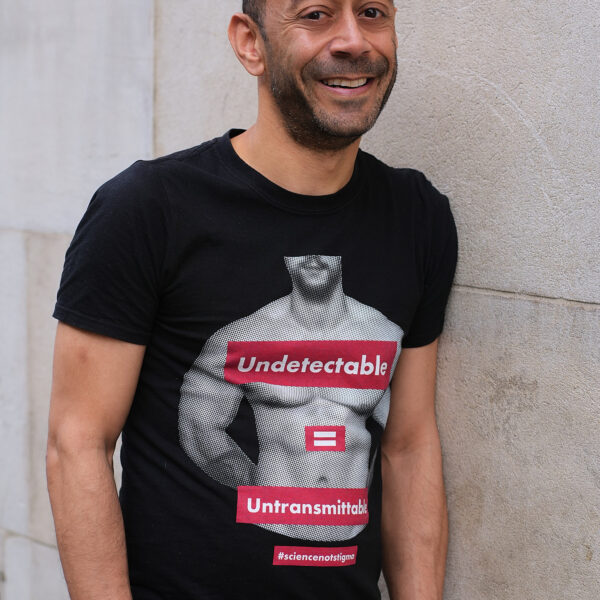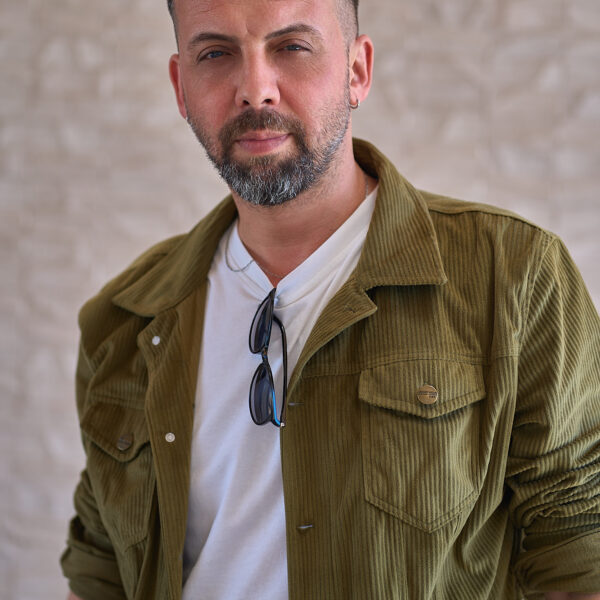
Kagan
My name is Kagan, and my work has always been…
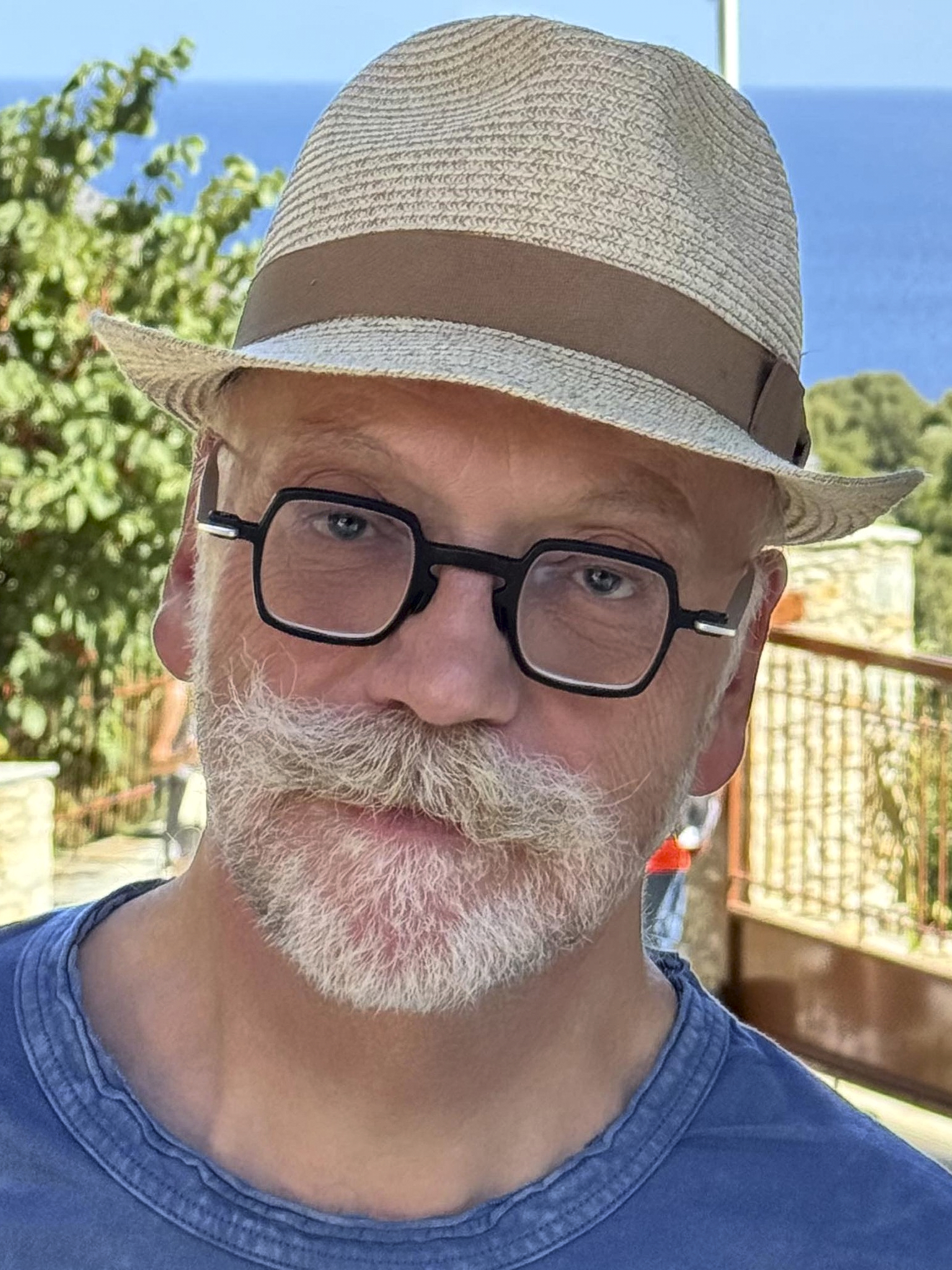
Roland Chesters. I’m 66 years old and gratefully retired. Before retiring, I spent ten years running my own consultancy business as a diversity and inclusion consultant with a particular focus on disability.
Before HIV entered my life, my partner, now my husband, Richard, and I used to volunteer for a charity delivering meals to people living with HIV isolated at home. That was really the extent of my connection to HIV at the time. I was aware of it, of course, but I never imagined it would one day become part of my own story.
I joined the Foreign Office in 2000. Up until then, I had never been open about my sexuality in the workplace. Richard and I simply never featured in conversations. Joining the Foreign Office changed that because everyone had to undergo rigorous security vetting, including declaring their relationships. For the first time in my life, I could be openly gay at work. It was actually hugely liberating.
Then, two years later, I started to become unwell.
Gradually, over the following years, I lost the use of my arms and legs. I lost the ability to speak properly. My coordination disappeared. My memory and cognitive function deteriorated. I saw consultant after consultant, specialist after specialist, but nobody could tell me what was wrong. At work, people could see it too. Roland’s underperforming. Roland’s not himself. Something is clearly wrong with Roland.
Richard suggested we go to Paris for a weekend. My mother was from Paris, and I was partly raised there. He thought a change of scenery might help. While we were there, I collapsed in the underground. I don’t remember any of it, but Richard had to physically carry me out and get me back to the hotel.
After that, he was so concerned that he came with me to my next appointment with my consultant. It happened to be with a lung specialist who recognised that we were a same-sex couple and asked me if I’d ever had an HIV test.
I hadn’t.
Richard and I had been together for ten years in a monogamous relationship. Before him, I had only had one other partner. HIV simply never crossed my mind. But by then, I was desperate. I remember saying, “Please test me for anything. Test me for everything. I think I’m going mad.”
The test was done on Thursday, 31 August 2006. We were due to go away on holiday for two weeks, two days later, so I told the consultant I’d get the results when I returned.
The following day, Friday, 1 September 2006, I went into work briefly to put on my out-of-office message. When I got home that evening, Richard hadn’t packed anything. I asked him why.
He took me in his arms and started crying.
In ten years together, I had never seen him cry before.
The consultant had phoned the house trying to reach me. He wanted to tell me that if I went away for two weeks, I would come home in a cardboard box.
HIV positive. AIDS. PML. Two weeks to live.
Even now, nearly twenty years later, I still cannot fully remember how I reacted. Part of me was relieved that somebody had finally found an answer and that I wasn’t losing my mind. But another part of me simply thought: I am going to die.
On Monday morning, Richard and I went to a sexual health clinic. They told me I was extremely unwell and started me on treatment immediately. In those days, that was unusual. They told me if I adhered to treatment, they might be able to give me another fifteen years of life, but they did not think I would ever walk again.
I spent six months relearning how to walk. Relearning how to talk. Relearning how to walk and talk together. Until you lose those abilities, you never truly understand how difficult they are.
Because sexual health records were kept separate, my employers were only told about the PML. But on my first day back at work, I shared my full diagnosis with my line manager because I felt I was living in a completely different world now. She was supportive, but said she needed to inform HR. HR immediately sent me a short email saying I was forbidden from telling anybody else because they could not be responsible for how people might react.
They gagged me.
They shut me down.
They stole my voice, which led me down a spiral of mental health decline to the point where I found myself very early one morning sitting on the riverbank with my feet in the water. The appeal of oblivion was overwhelming. Richard found me.
Eventually, I decided I had spent too long hiding in the shadow of my sexuality; I was not prepared to hide in the shadow of my HIV status. I organised an HIV awareness event at the Foreign Office with speakers from the Terrence Higgins Trust. I put posters around the office saying I was organising the event as a colleague living with HIV and AIDS.
The posters were slashed, graffitied, ripped from the walls.
The event still went ahead, although only a handful of people attended.
The following year, I simply left a red ribbon collection box outside my office. Somebody threw it onto the floor, scattered the ribbons everywhere and trod on them.
And this was supposed to be a place filled with intelligent, educated people.
At the same time, the Foreign Office was pressuring me into taking early retirement on medical grounds. They even filled out the forms for me and asked me to sign them. I joined the union, and after two years of negotiations, it was agreed that I could move into a lower-grade role without management responsibilities while keeping my salary. That compromise allowed me to stay.
And because I had spoken up, others slowly began to feel they could speak too.
I became Chair of the Disabled Staff Network and later the Foreign Office Diversity and Equality Officer. In those roles, I felt we finally began to shift attitudes and improve how disabled employees and people living with different conditions were viewed.
That journey eventually led me to write Ripples from the Edge of Life. The book was never just about me. I invited others from across the HIV community to share their stories too: gay men, women, people from different walks of life. Because HIV never impacts only one person. It ripples outward into relationships, friendships, workplaces, and families. None of us lives an isolated life.
I have continued volunteering ever since. I’m a Positive Voices speaker, a peer mentor with Positively UK, a facilitator with HIVitality and a volunteer with both the National AIDS Memorial Quilt and the National HIV Story Trust.
I know how extraordinarily lucky I am.
Very few people survive PML.
The lasting effects remain. I now live with dyspraxia, which means I can be clumsy and fall over. I also have prosopagnosia, meaning I struggle to recognise faces. Even my husband knows now that if we meet in a public place, he has to come and tap me on the shoulder and say hello, otherwise I may walk straight past him. It has frequently placed me in embarrassing social situations, which I am now able to just laugh off.
But I am still here.
And I never forget how grateful I am for that. HIV has given me a voice, a platform, a legacy which I did not have before.
If somebody newly diagnosed with HIV came to me terrified today, I would first hug them (with their permission, of course!), then tell them to breathe. Then I would tell them to look at the reality. If you take treatment and adhere to it, you will most likely live a long and healthy life. Once you become undetectable, you cannot pass HIV on to anyone else.
But I would also tell them that stigma still exists. People can still react with ignorance, fear, and cruelty. You do not have to disclose your diagnosis to anybody unless you choose to.
HIV is no longer the death sentence it once was.
I know that because I was told I had two weeks to live.
And yet, nearly twenty years later, I am still here.
Share this story on: